India's Viral AI Photo Trends, Explained: Figurines, Sarees and the '80s
By GetPhotoPrompt Editors · Updated 2026-09-27

The short version
Between August 2025 and September 2026, India turned AI photo editing into a mass hobby. It started with Google's Gemini image model, better known as Nano Banana, and a craze for 3D figurines. It moved on to retro Bollywood portraits and the "AI saree," surged again around Durga Puja and Diwali, and came back in September 2026 as a photorealistic '80s look that Indian media dubbed the ChatGPT '80s photo trend.
This page lays out what happened and when, gives a source for every number, and separates confirmed facts from viral claims. Everything here was checked against the sources listed at the end on September 27, 2026.
Timeline: August 2025 to September 2026
- August 26, 2025: Google announces Gemini 2.5 Flash Image, the model nicknamed Nano Banana, and brings it to the Gemini app.
- September 1–13, 2025: Daily Gemini downloads in India climb from 55,000 to a peak of 414,000, and Gemini takes the top overall spot on India's App Store and Google Play (Appfigures data reported by TechCrunch).
- September 4, 2025: Google's Josh Woodward says more than 200 million images have been edited with the model since launch, and that more than 10 million of the people using it are new to the Gemini app (9to5Google).
- September 14, 2025: Senior IPS officer V.C. Sajjanar warns people not to share personal photos or data with unverified websites and unauthorized apps that claim to make Nano Banana-style images (Storyboard18).
- September 17, 2025: TechCrunch reports that India is, for now, the No. 1 country for Nano Banana usage, according to Google DeepMind's David Sharon.
- September 18, 2025: A viral Instagram post about a mole appearing in an AI saree edit draws an official response from Google (Free Press Journal).
- September 24, 2025: Durga Puja prompt lists appear in Indian media, including ten prompts from India TV.
- October 15, 2025: Google says Nano Banana has generated 5 billion images in less than two months, as it announces the model is coming to Search and NotebookLM, with Google Photos to follow (Digital Camera World). Diwali prompt roundups appear the same day (Free Press Journal).
- November 20, 2025: Google adds image verification to the Gemini app and starts embedding C2PA metadata in images from its newer Nano Banana Pro model (Google).
- November 26, 2025: A Bengaluru technologist shows that Nano Banana Pro can produce realistic-looking fake Aadhaar and PAN card images (The Logical Indian).
- December 4, 2025: Google's India Year in Search 2025 names Gemini the No. 2 top overall search of the year and says Nano Banana prompts drove searches such as "3D model trend" and "Gemini saree trend prompt."
- August 14, 2026: Google makes the visible watermark on its AI images optional, while the invisible SynthID watermark and C2PA metadata stay (TechCrunch).
- September 10, 2026: The '80s photo trend sweeps Instagram and X in India, and politicians join in (India TV, Free Press Journal).
The numbers, and who is counting
These are the figures most often repeated about the trend, with who reported them:
- 200 million+ images edited by September 4, 2025, about nine days after launch (Google's Josh Woodward).
- 5 billion images generated in under two months (Google, October 2025).
- 414,000 Gemini downloads in India on September 13, 2025, up from 55,000 on September 1, more than a sevenfold jump (Appfigures estimates, via TechCrunch).
- No. 1 country for Nano Banana usage: India (Google DeepMind's David Sharon, September 2025).
- No. 2 top overall search in India in 2025: Gemini (Google's Year in Search).
- 20 billion+ pieces of AI-generated content watermarked with SynthID since 2023 (Google, November 2025). That counts every kind of content Google has watermarked, not just photos from these trends.
Keep two caveats in mind. Google's usage figures are self-reported, and download counts are third-party estimates. None of these numbers is broken down by trend, so nobody outside Google can say how many of those images were figurines, sarees or festival portraits.
How the looks evolved: figurines, sarees, then the '80s
The first wave was the figurine: people generated miniature versions of themselves, often posed in front of a computer screen like a collectible on a desk. According to Sharon, the trend first emerged in Thailand, spread to Indonesia and went global after it took off in India.
Indian users quickly bent the same tool toward nostalgia. TechCrunch described people re-creating retro looks inspired by 1990s Bollywood, complete with period fashion, hairstyles and makeup, and a spin-off nicknamed the "AI saree," in which users put themselves in traditional Indian dress with a vintage photo finish. Sharon told reporters the retro trend was local to India. Our retro photo prompts and saree photo prompts cover both looks.
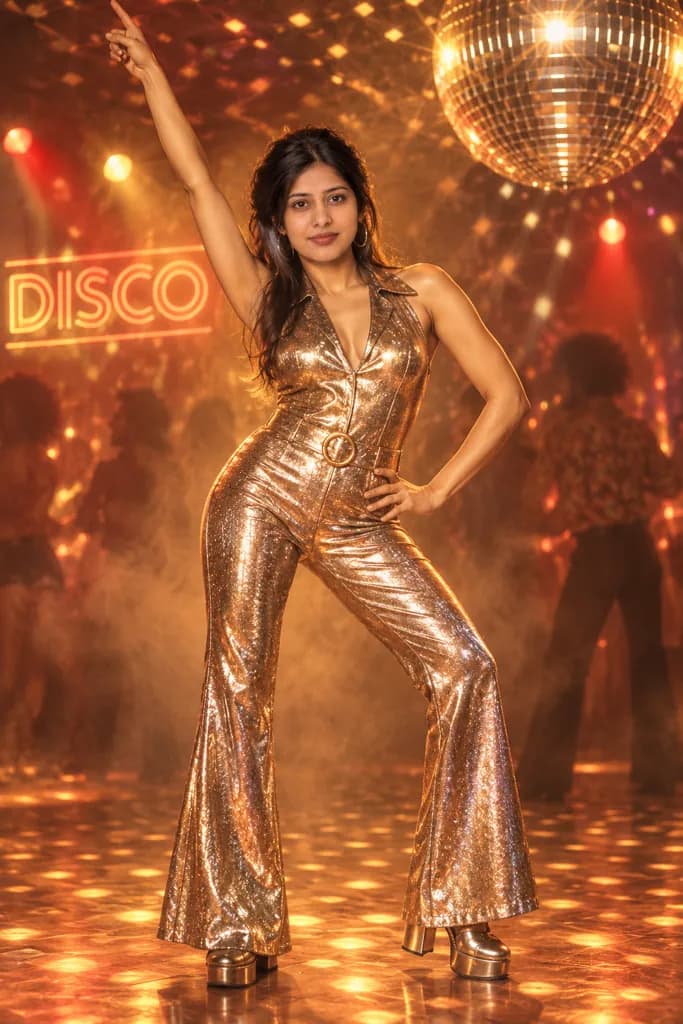
The September 2026 wave works differently. India TV's explainer describes the method: you upload a recent photo and ask for your face to stay recognizable while the clothes, hair, accessories and setting change to fit the 1980s. The goal is no longer a figurine or a cartoon but a photo that looks as if it was really taken in that decade: big hair, colorful clothes, studio lights, soft focus and film grain. You can try that look with our 1980s photo prompts.
Politicians joined in. Union minister Piyush Goyal shared an AI-generated portrait captioned "Vibing to the 80s trend," and Kiren Rijiju and Himanta Biswa Sarma posted retro portraits too, Free Press Journal reported. Party accounts took part as well: Congress Sevadal shared AI-generated 1980s-style photos of Rahul Gandhi, while an image of Prime Minister Narendra Modi shared by the BJP's official account appeared, the paper noted, to be an actual photograph rather than an AI recreation. Not every retro picture in your feed is AI.
The lesson for prompt writing runs through all three waves. The prompts that work name what to keep (your face, your pose), name the era or style, and then give three or four concrete details, such as the fabric, the light, the background and the camera.
Festivals as the accelerant
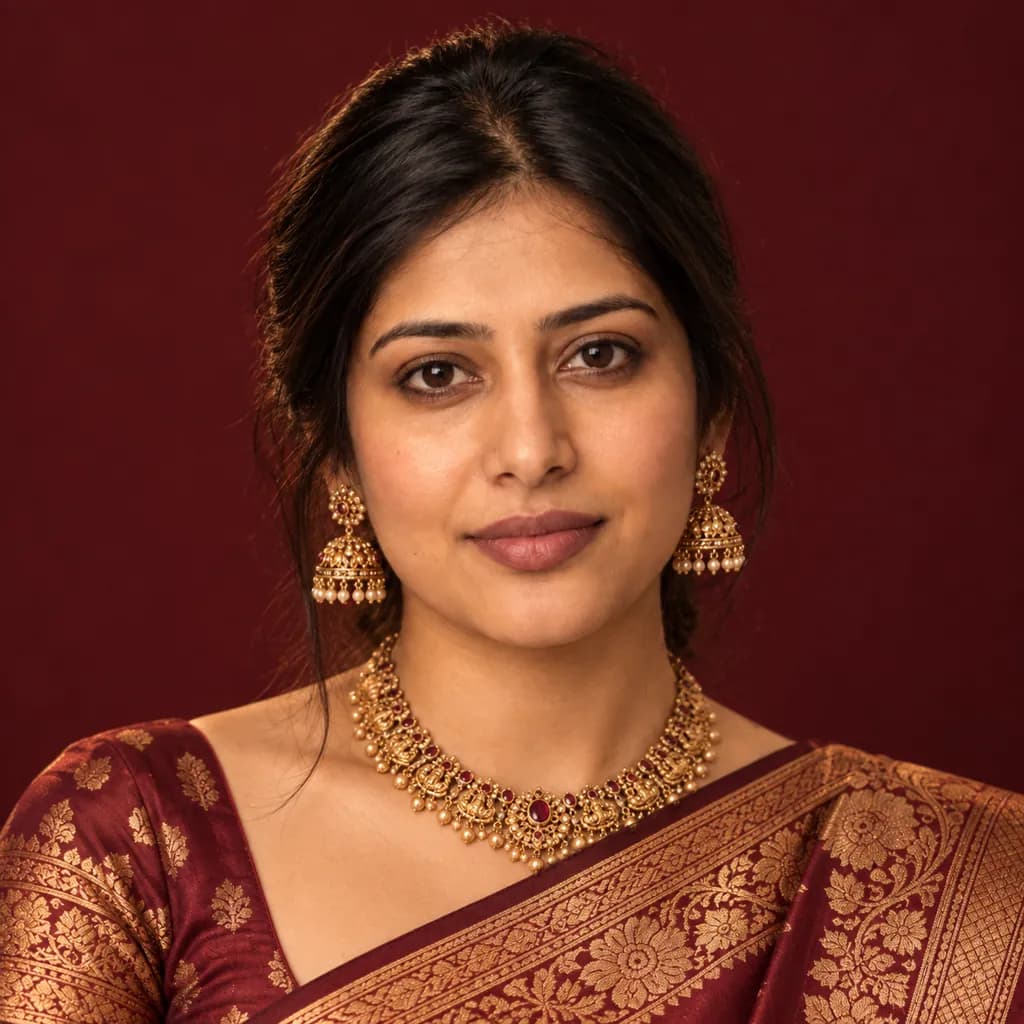
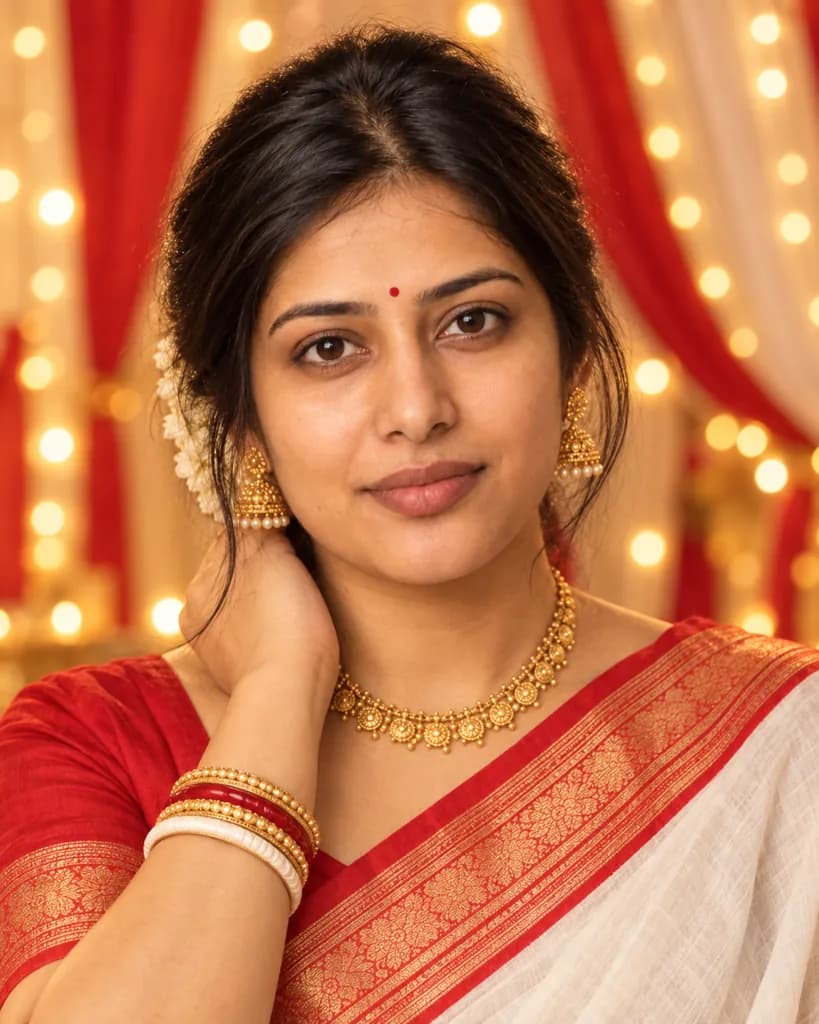
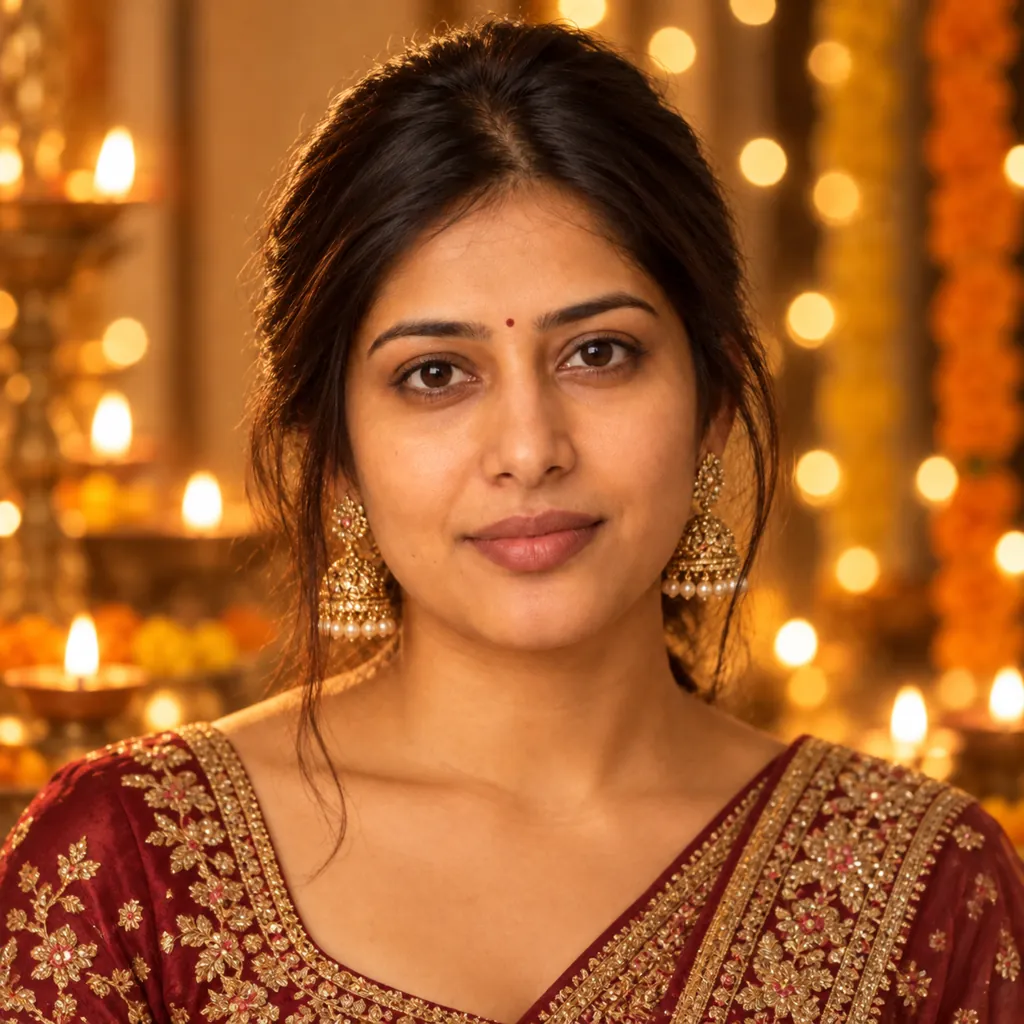
Festivals drove their own waves, and in 2025 the media prompt roundups landed a few days before each one. India TV published ten Durga Puja prompts on September 24, ranging from red-and-white sarees to dhunuchi dance scenes. Free Press Journal's Diwali list on October 15 included couples bursting crackers, couples playing with their pets among glowing diyas, and a couple in traditional wear in front of a lit-up temple.
One difference is worth flagging. Some of those lists include prompts that generate the goddess herself, such as a photorealistic Durga idol. Ours deliberately don't. None of the prompts on our Durga Puja, Diwali or Karwa Chauth pages depict a deity, and most of our Durga Puja prompts explicitly tell the model to keep idols, statues and deity figures out of the frame. A festival portrait should be about you, and a generated image of a deity is easy to get wrong in ways many people would find disrespectful.
If you plan to make festive photos, try your prompt a few days before the festival rather than on the day, so you have time to redo anything that looks off.

Can you tell if a photo is AI? SynthID and C2PA
Google marks content made with its AI using SynthID, which it describes as digital watermarking technology that embeds imperceptible signals into AI-generated content. Google says more than 20 billion pieces of AI-generated content have been watermarked with SynthID since it was introduced in 2023.
Since November 2025 you can check an image yourself. Upload it to the Gemini app and ask something like "Was this created with Google AI?" Gemini checks for the SynthID watermark and gives you more context about whether Google AI made or edited the image. At the same time, Google began embedding C2PA metadata, an industry standard that records where a file came from and how it was made, in images from its newer Nano Banana Pro model.
Two limits matter. When Google launched the check, it looked for Google's own watermark, so it could vouch only for images made or edited with Google AI; Google said support for C2PA credentials from tools outside its ecosystem would come over time. And a negative result does not prove that a photo is real.
In August 2026 Google made the visible watermark optional and said Gemini users would be able to switch it off under Settings > Media Watermark. The invisible SynthID watermark and C2PA metadata stay either way. Josh Woodward, Google's VP for Gemini, described the change as "striking a balance here between creative control and safety."
Safety: the warnings worth knowing
Lookalike apps and sites. Sajjanar's September 2025 advisory was aimed at unverified websites and unauthorized apps claiming to produce Nano Banana-style images. "Trends vanish, but data uploaded to fraudulent platforms is almost impossible to retrieve," he warned in a translated post.
The mole scare. An Instagram user who uploaded a photo of herself in a full-sleeved outfit said her AI saree edit showed a mole on her left hand that she has in real life but that was not visible in the original. Google told Free Press Journal that the model was not trained with user data from Google Photos, Google Workspace or Google Cloud, and that any detail that shows up in a generated image without being visible in an input image in the same Gemini conversation is a coincidence. We found no independent investigation that settles it either way, so treat it as a viral claim that Google disputes, not as proof of a data leak.
Fake IDs. In November 2025, Bengaluru technologist Harveen Singh Chadha showed that Nano Banana Pro could generate realistic-looking fake PAN and Aadhaar cards. He withheld his prompts to avoid enabling misuse, and his images still carried a faint Gemini watermark. According to The Logical Indian, officials from MeitY, India's IT ministry, stressed that creating or circulating forged identity documents is illegal regardless of motive.
A practical checklist before you upload:
- Use the official Gemini or ChatGPT app or website, not lookalike sites or apps trading on a trend's name.
- Upload photos of yourself, or of adults who have agreed. Crop out ID cards, documents, addresses and anything else you would not post publicly.
- Never try to generate identity documents, and never put real people in situations they did not agree to.
- Label AI edits when you share them, especially anything that could pass for a real photo.
- Be skeptical of viral "the AI knew something it shouldn't" posts until there is evidence.
This site only publishes prompts. We don't host an image generator, don't store your photos and don't require an account.
What's still unconfirmed
- Which tool "owns" the '80s trend. India TV's explainer names only ChatGPT, and the Indian headlines we checked call it the ChatGPT '80s trend, but prompt sites also publish Gemini versions and the look can be made in either tool. Don't describe it as a Gemini feature.
- The mole. Google calls it a coincidence, and no independent test has confirmed or ruled out anything else.
- A national advisory. We could not find a CERT-In advisory specifically about AI photo trends. The warnings we could trace came from police officers such as Sajjanar.
- Trend-by-trend numbers. No company has published how many images each trend produced, and Google's totals cover every use of the model.
About our sample images
The pictures on this page and on our prompt pages were made with ChatGPT's image generator from an AI-generated stand-in photo, never a real person, and each one is checked by hand before it goes live. Pasting the same prompt into Gemini with your own photo gives a similar look, not an identical copy. The prompt pages below have copy-ready prompts for each look in this timeline.
Try these prompts


Sources
- 9to5Google — Nano Banana responsible for 10+ million first-time Gemini app users (2025-09-04)
- TechCrunch — India leads the way on Google's Nano Banana with a local creative twist (2025-09-17)
- Storyboard18 — IPS officer issues cyber alert amid Google Gemini's Nano Banana AI craze (2025-09-16)
- Free Press Journal — Google Responds To Nano Banana AI Privacy Scare, Calls Viral ‘Mole’ Detail A Mere Coincidence (2025-09-18)
- India TV — Create Durga Puja ready photos with Gemini Nano Banana: 10 Easy prompts for stunning AI images (2025-09-24)
- Digital Camera World — Nano Banana has generated 5 billion images in two months. Now, it’s about to come to Google Photos… (2025-10-15)
- Free Press Journal — Google Gemini Nano Banana AI Diwali Trend 2025: 5 Must-Try Prompts That Will Light Up Your Selfies (2025-10-15)
- Google — How we’re bringing AI image verification to the Gemini app (2025-11-20)
- The Logical Indian — Bengaluru Techie Raises Alarm After Showing How Google’s Nano Banana Can Create Fake Aadhaar, PAN Cards (2025-11-26)
- Google India — India’s Year in Search 2025: The A to Z of Trending Searches (2025-12-04)
- TechCrunch — Google will now allow users to remove visible watermark from its AI generations (2026-08-14)
- India TV — What is the viral ChatGPT '80s photo trend on Instagram? How different is it from Ghibli and Nano Banana trend (2026-09-10)
- Free Press Journal — PM Modi, Rahul Gandhi, Piyush Goyal And Other Politicians Join Viral ChatGPT 80s AI Photo Trend- Check Out Posts (2026-09-10)